
The Cols: Pyrenees
Cauterets-Cambasque
1,330M
The climb to Cauterets-Cambasque might not be as well known as some of its Pyrenean neighbours, but it has a long association with the Tour de France. The Tour first visited the spa town of Cauterets for a stage finish in 1953. The town itself has been attracting visitors for much longer, thanks to its thermal waters. The impressive Thermes de César date back to the nineteenth century, and a railway followed in 1899, bringing visitors up the valley. Today, you can even explore the route of the old railway by gravel bike. The climb doesn't have to end in Cauterets, though. The road continues towards the Cambasque ski area, turning away from the route to Pont d'Espagne for a much tougher final ascent. The Tour first used this higher finish in 1989, when Miguel Indurain took the stage victory.
one valley road - lots of hidden features.
BEFORE YOUR RIDE
| Start | Pierrefitte-Nestalas |
| Distance | 16.1km |
| Average | 5.2% |
| Character | Steeper final ascent beyond Cauterets |
| Resupply | Cauterets |
Note
Mountain weather can change quickly, both in temperature and conditions. Always carry a rain jacket, even in the middle of summer, and remember that a long descent can get cold very quickly. I tend to use a small 1.5-litre handlebar bag, which has enough room for arm and leg warmers, long-fingered gloves, a buff and a rain jacket. Check the mountain weather forecast and road conditions before setting off, including any closures affecting your route. The emergency number in France is 112.
PIERREFITTE-NESTALAS to CAUTERETS-CAMBASQUE
I was really tempted to split this into two separate climbs, but the truth is that the road up to the spa town of Cauterets is a lovely climb in its own right. The climbing begins almost immediately as you turn off the roundabout at Pierrefitte. If you've already ridden some distance to reach the foot of the climb, there are three water fountains close to the roundabout where you can top up your bottles before setting off. From here, the road winds its way up through a spectacular gorge, passing waterfalls, bridges and open-sided tunnels. Even though the tunnels are partly open, I'd still recommend using steady front and rear lights rather than flashing ones. As you approach Cauterets, one of the real highlights is a series of tightly packed switchbacks that offer some fantastic photo opportunities. At one of the bends, you can peer over the edge and see the remains of the old road, partially washed away during the catastrophic floods and landslides of 2013. The replacement road takes you high above the damaged section, with the switchbacks adding something quite special to the climb. Once you reach Cauterets, there are plenty of opportunities to stop for something to eat and refill your water bottles. To find the final climb, follow the one-way system through town, crossing over the Gave de Cauterets so that the river is on your right. Continue along the D920 as you leave town, looking out for a small parking area and the turning onto the D312 towards Cambasque. It's almost a full U-turn, and you should see the familiar Tour de France climb signs pointing you in the right direction. From here, the character of the road changes completely. It ramps up sharply, and the next three kilometres are a proper challenge, averaging around 8–10%, with some sections steeper still. You'll know when you've cracked the hardest part. After crossing a cattle grid, there's even a short descent before the gradient settles back to around 5–6% for the final stretch. At the top, don't expect a grand mountain summit or a collection of cafés. The road simply ends at a gravel parking area. But after that final climb, you'll certainly have earned the chance to stop and take in your surroundings.
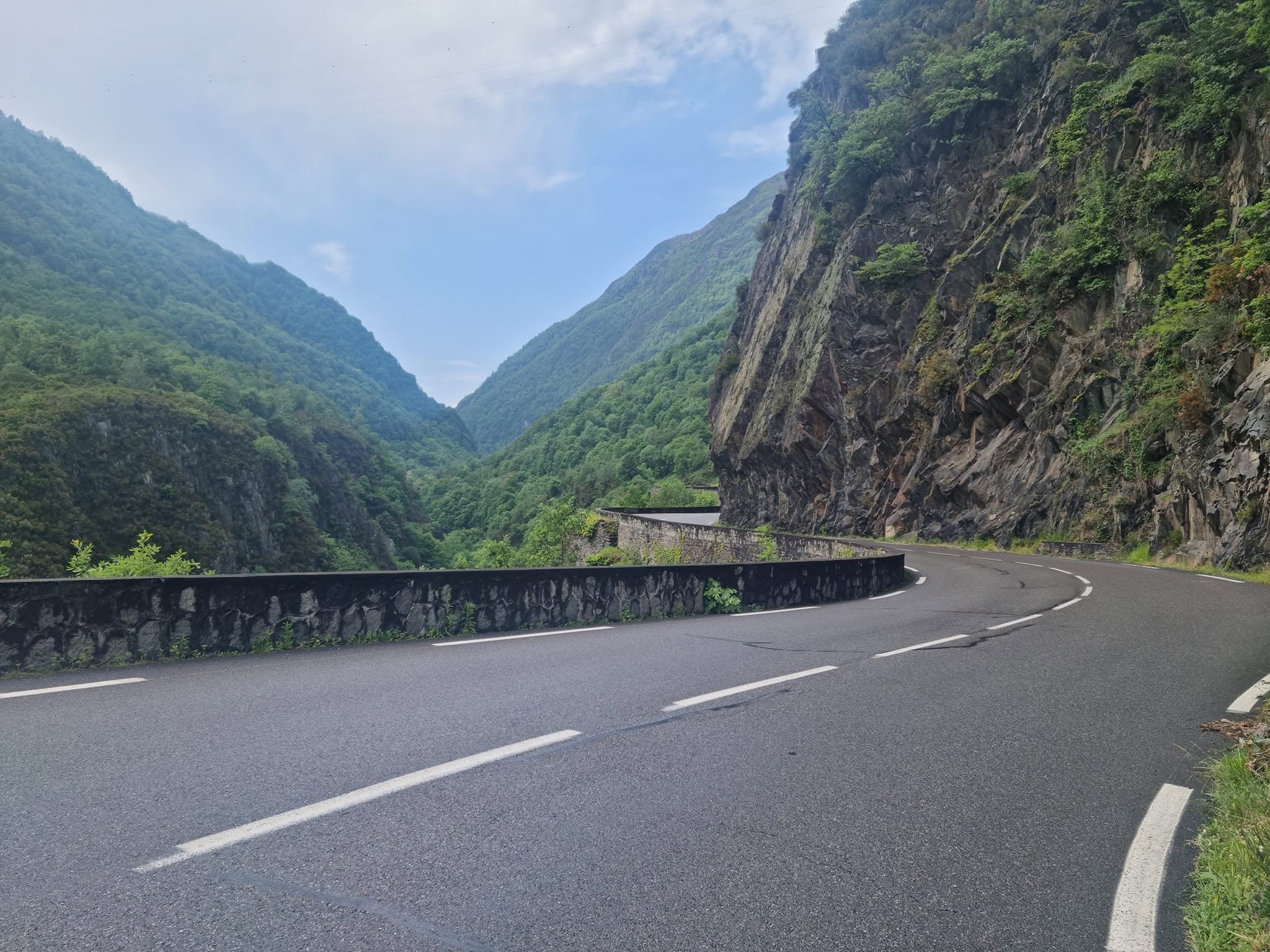
The road through the gorge towards Cauterets
FROM MY SADDLE
I really like the climb up here, having ridden it a few times in varying guises. Quite often, though, I choose the bigger climb that's almost hidden away up here — Pont d'Espagne. It takes you towards the heart of the Pyrenees National Park, into a spectacular landscape of forests, mountains and waterfalls. To find it, follow the same route up to Cauterets, but instead of turning right towards Cambasque, stay on the main road and head towards La Raillère. You can stop for refreshments here if needed, and there's a VERY nice restaurant beside the big waterfall if you fancy sitting down for a proper meal. One word of warning, though. If you're someone who suffers from café legs, this might not be the best place for a long stop. The road gets seriously steep after La Raillère, winding through switchbacks and tree-lined sections before eventually reaching the huge Puntas car park. Then comes the secret… Once you reach the large car park, sneak around the left-hand side of the building. There are signs prohibiting cycling beyond this point, so don't ride your bike. I've always dismounted and pushed mine up the road, and I've never been challenged, although you should check the current access rules before doing the same. A short walk brings you to the real hidden gem — Pont d'Espagne. Two spectacular waterfalls converge beneath a beautiful old stone bridge, the water roaring through the rocks below. Depending on the time of year and the water flow, it can be an incredibly powerful sight. There's even an auberge tucked away up here. I've enjoyed a baguette, frites and a Coke while taking in the surroundings. Don't rush away. Take the opportunity to wander about, explore and get some photographs. It's one of those places that deserves a little more time than a quick stop. When you're ready, descend back towards Cauterets. And if you haven't already ridden Cambasque, there's always the option of turning off and tackling that final climb on the way back.
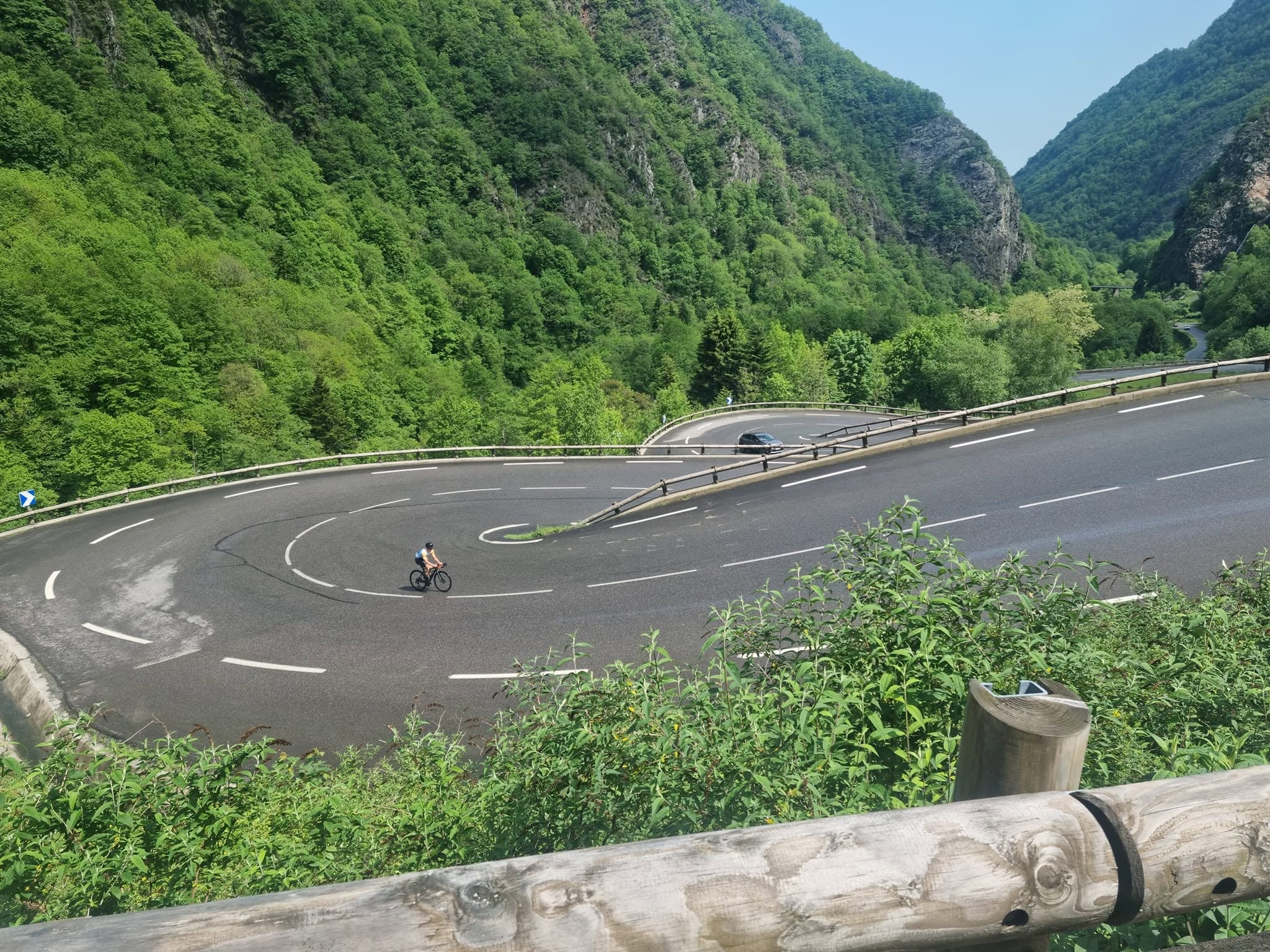
The switchbacks approaching Cauterets
BEYOND THE SUMMIT
For what feels like an isolated little gorge and valley, with only one road in and out, there's actually quite a lot to explore beyond the main climb.
The old railway route — Follow the former railway line towards Cauterets for a gentler gravel alternative to the main road climb.
Cambasque ski area — There are gravel tracks extending above and beyond the road climb finish, offering possibilities for further exploration if you've got the right bike and conditions allow.
The valley voie vert — A lovely option for some easier riding in the valley, particularly if you want to finish the day with something a little more relaxed.
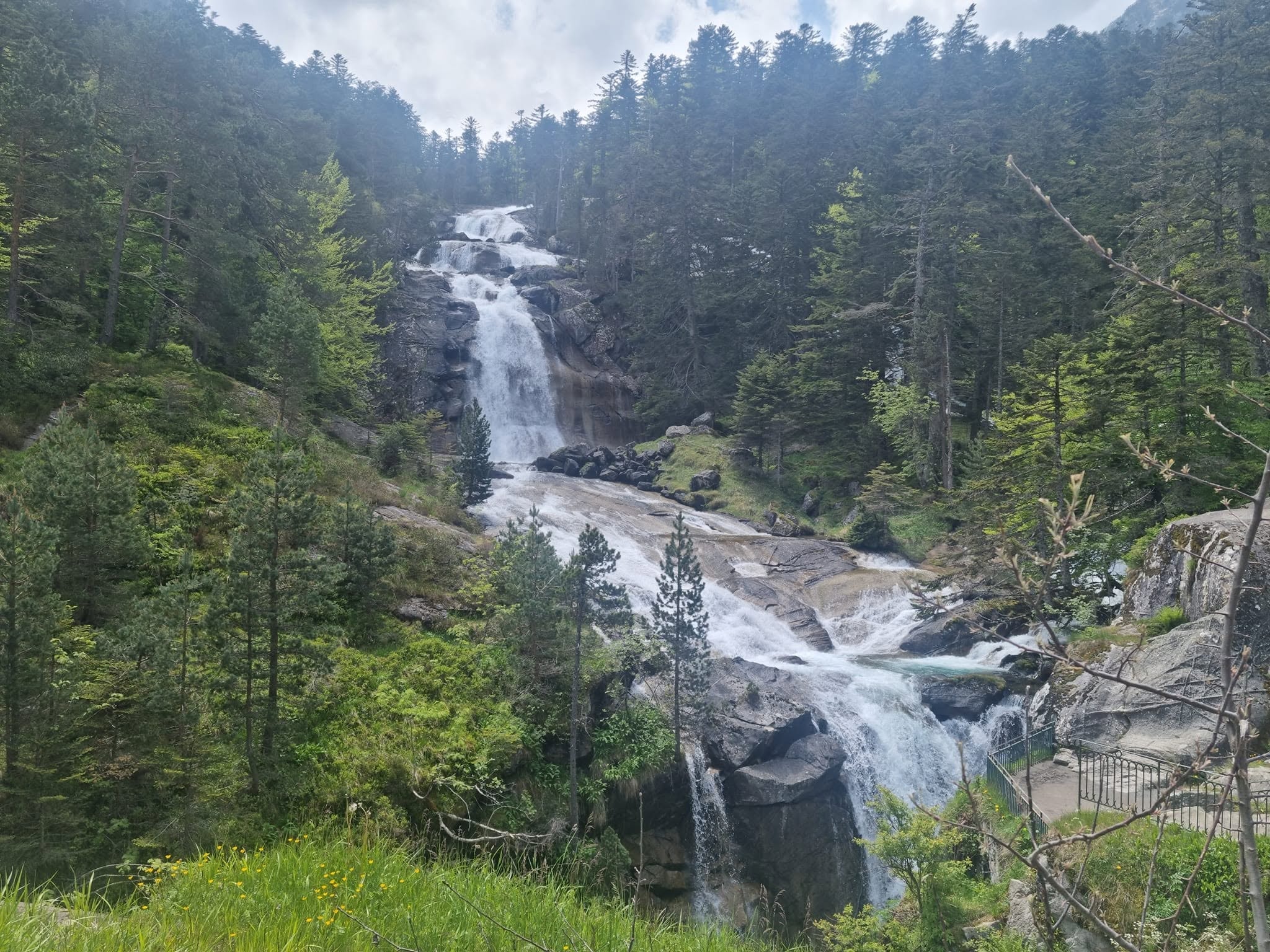
The hidden waterfalls at Pont d'Espagne
There's more to this mountain than the gradient.
This little corner of the Pyrenees has an awful lot to offer. It also played a significant part in my own journey from the sofa to the high mountains. That story runs through the books in The Cols of a Midlife Cyclist series.
If you've enjoyed this guide, take a look at the books and discover the stories behind the climbs.