
The Cols: Pyrenees
Luz Ardiden
1715M
Luz Ardiden is often described as the Pyrenees' answer to Alpe d'Huez. And it's not difficult to see why. With 30 hairpins compared with Alpe d'Huez's famous 21, and a climb of similar length and elevation gain, the similarities are certainly there.
The ski station first opened in 1975 on the Béderet side of the mountain, with the Aulian sector following a year later. It's the road to Aulian that cyclists know best, winding its way through those famous hairpins to the Tour de France finish line.
In 1985, less than a decade after Aulian opened, Luz Ardiden made its Tour de France debut. Since then, its list of stage winners has read like a who's who of professional cycling's great mountain climbers.
But perhaps the moment most people associate with Luz Ardiden came in 2003.
On the lower slopes, Lance Armstrong caught his handlebars on a spectator's musette bag and crashed heavily, bringing down Iban Mayo in the process. Armstrong remounted, chased back to his rivals and eventually crossed the line first after one of the most dramatic finishes the mountain has witnessed.
And it's not only the Tour de France that has brought drama to these slopes. Despite being on the French side of the Pyrenees, Luz Ardiden has also hosted two stage finishes of Spain's Vuelta a España, in 1992 and 1995.
BEFORE YOUR RIDE
| Start | Luz-Saint-Sauvier |
| Distance | 13.5km |
| Average | 7.0% |
| Character | 30 hairpins, sustained climbing and sweeping bends |
| Resupply | None on the ascent |
Note
Mountain weather can change quickly, both in temperature and conditions. Always carry a rain jacket, even in the middle of summer, and remember that a long descent can get cold very quickly. I tend to use a small 1.5-litre handlebar bag, which has enough room for arm and leg warmers, long-fingered gloves, a buff and a rain jacket. Check the mountain weather forecast and road conditions before setting off, including any closures affecting your route. The emergency number in France is 112.
LUZ-SAINT-SAUVIER – LUZ ARDIDEN
Leaving Luz-Saint-Sauveur, the climb begins relatively gently, giving you a chance to settle into a comfortable rhythm before the mountain starts asking more serious questions.
The opening kilometres wind steadily upwards through the trees, with gradients generally around 5–7%. It's a pleasant enough introduction, but don't be fooled into thinking the whole climb will be this accommodating.
You'll pass through the little village of Grust at around 4 km, and it's shortly afterwards that Luz Ardiden begins to show its teeth.
The next couple of kilometres are amongst the toughest of the ascent, with gradients hovering around 9%. It's a sustained effort rather than a series of short, sharp ramps, so finding a pace you can hold is far more useful than trying to attack every bend.
The trees still surround much of the road, occasionally opening up to reveal glimpses of the valley below. Each one gives you a little reminder of just how much height you've already gained.
As you climb higher, the famous switchbacks begin to take centre stage. One sweeping bend follows another, the road folding back across the mountainside in that wonderfully satisfying way that makes Alpine and Pyrenean climbing so memorable.
This is where Luz Ardiden really earns its comparison with Alpe d'Huez.
Find your rhythm, enjoy the hairpins and keep turning the pedals.
With approximately 1.5 km remaining, you'll reach a junction where the road splits towards the two ski station sectors. Follow the road to the left towards Aulian, to continue towards the famous Tour de France finish.
The final hairpins bring you towards the ski station, before one last sweeping bend delivers you onto what looks like a large car park.
But don't stop just yet.
As you round that final bend, the Luz Ardiden ski station building will be directly behind you. The stretch of tarmac ahead is where the Tour de France finishes, so keep riding almost to the gravel to complete the climb.
And there's one final little bonus before you descend.
Turn around, ride back past the left-hand side of the building and continue through the large car park behind it, right towards the far edge of the tarmac.
From here, you can look back across the mountain you've just climbed. Those famous hairpins spread out across the slopes below, twisting their way back towards the valley.
It's an incredible view, and one of the best photographs you'll take on Luz Ardiden.
After 13.5 km of climbing, you've certainly earned a few minutes to enjoy it.
Luz-Saint-Sauveur to Luz Ardiden — elevation profile
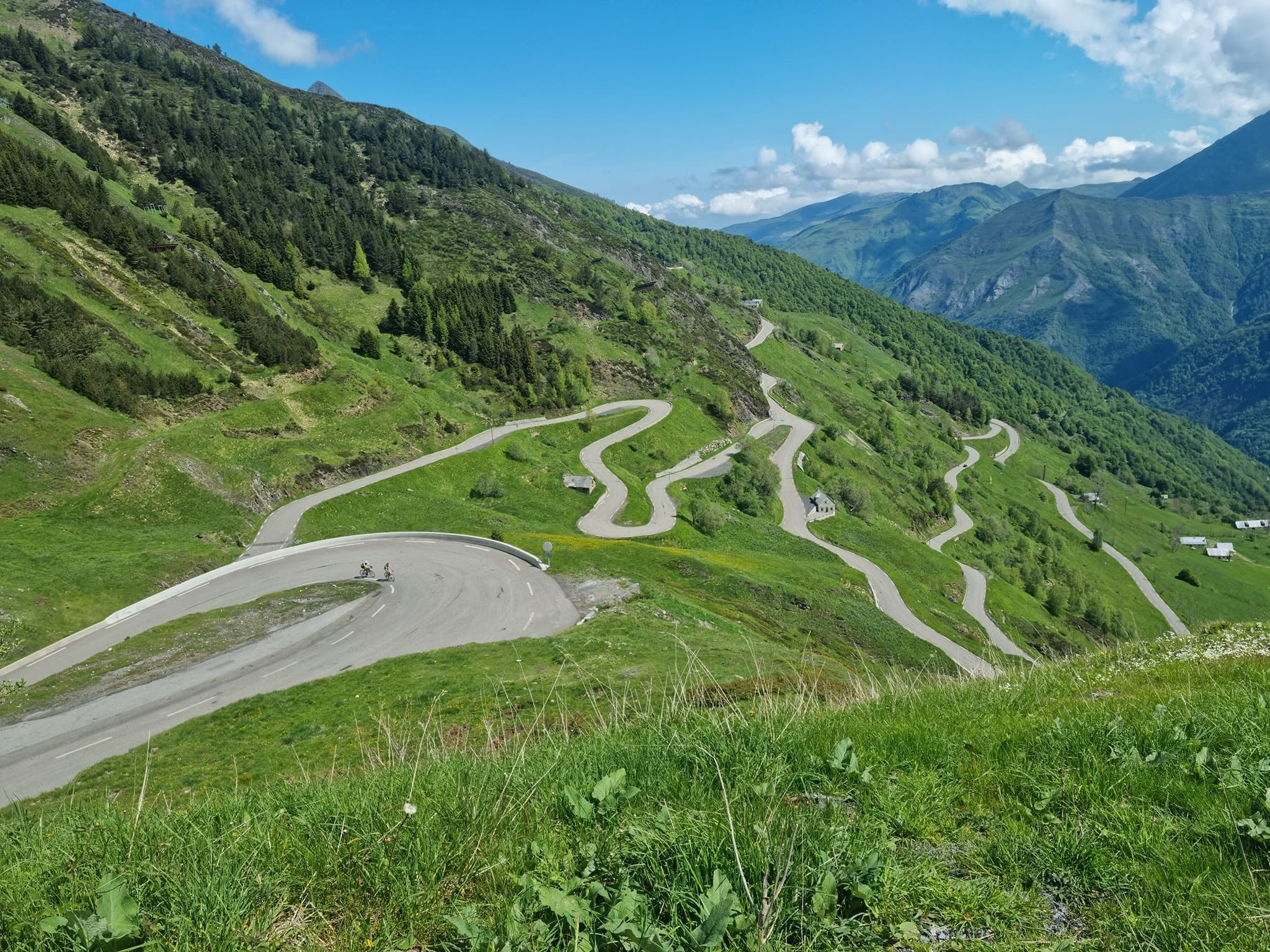
The famous Luz Ardiden switchbacks
FROM MY SADDLE
The main climb to Luz Ardiden is tough enough. It's roughly the same length and elevation gain as Alpe d'Huez, but with even more hairpins.
So naturally, I decided to find a way up that was longer, steeper, narrower and considerably more remote.
Because why wouldn't you?
It was 2023, and I was heading home later that day. I'd worked out that I had about four hours of riding time before I needed to get back, pack the bike and head for the airport.
Plenty of time for one last adventure. Or so I thought.
I set off up the gorge from Luz-Saint-Sauveur, keeping an eye out for a little road branching off towards the village of Viscos.
And what a lovely road it turned out to be.
Narrow, quiet and winding its way up through the trees, with a rough surface in places and hardly a soul around. The gradients were a little steeper than the conventional ascent, but the scenery more than made up for the extra effort.
At one point, I stopped and propped my bike against a pile of logs to take a photograph. Beyond it, the mountains seemed to disappear into the distance, one hazy layer after another.
One of those moments when you remember exactly why you love riding in the mountains.
It's certainly not a road I'd choose to descend, though. The narrow width, rough surface and steeper gradients make it far better suited to climbing.
Eventually, the road joins the main Luz Ardiden ascent with approximately 4 km remaining.
And here I had a decision to make.
Turn left and head back down towards the valley, or turn right and carry on climbing towards the summit.
I checked the time.
I had about an hour before I absolutely had to turn around.
Well, 4km in an hour? Surely, I could manage that!
So onwards I plodded.
As I climbed higher, I began catching glimpses of the ski station ahead, getting a little closer with each bend.
And when you finally reach the top, the views really are something special.
Looking back across those sweeping switchbacks, you can see the road twisting its way down the mountainside. Occasionally, you'll spot another cyclist making their way up, looking absolutely iddy-biddy against the enormous landscape.
It's only then that you get a real sense of the scale of the place.
The one disappointment has been the lack of facilities at the summit during my visits. On both occasions I've ridden Luz Ardiden, the cafés and ski station facilities have been closed.
There has, however, been an accessible water tap on the outside wall of the ski station building, which I've used to refill my bottles.
A useful little detail to know, although I certainly wouldn't rely on it being available every time.
And with the bottles topped up, it was time to point the bike downhill and get back before my flight home.
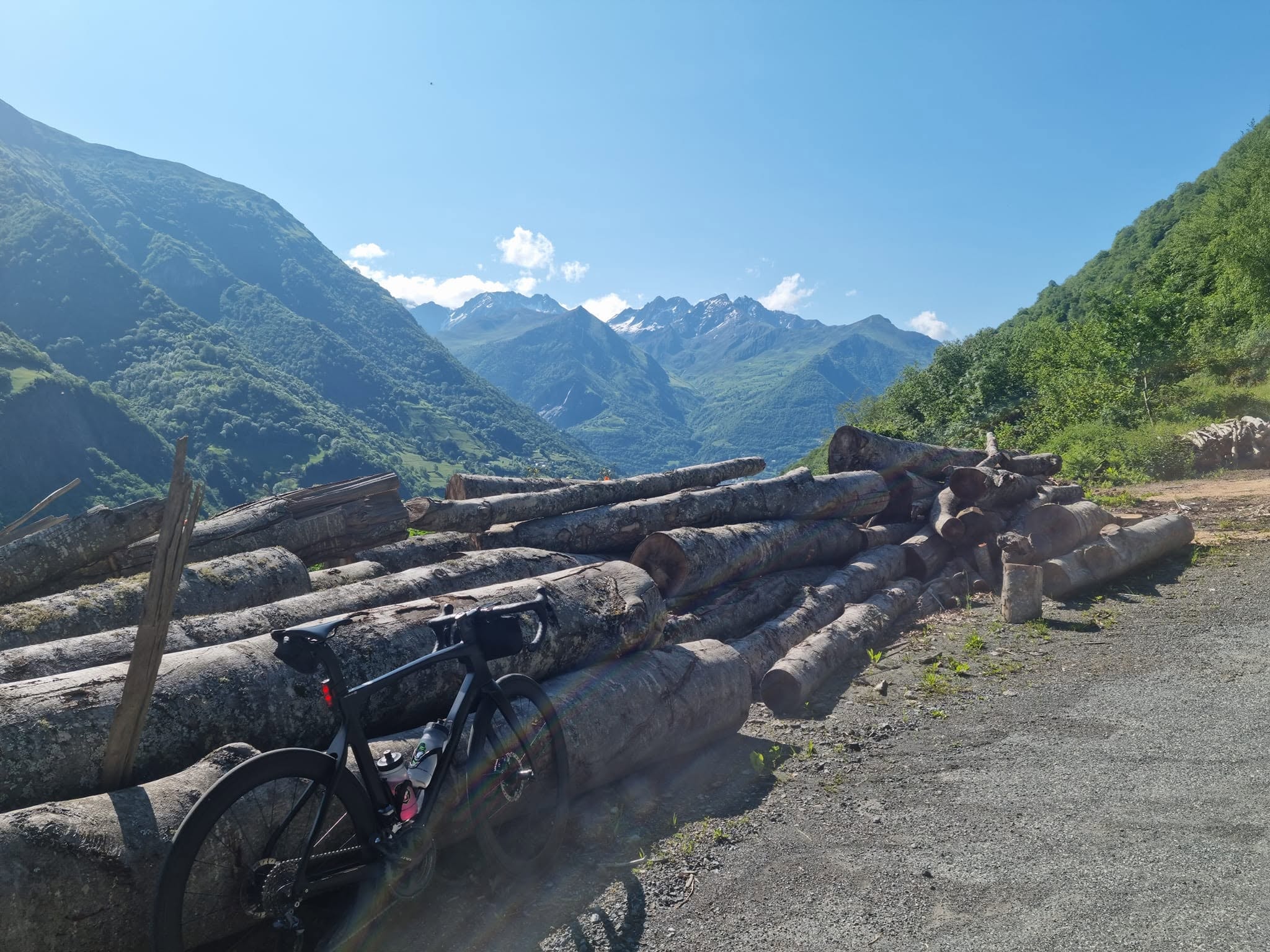
One of those moments when you remember exactly why you love riding in the mountains
BEYOND THE SUMMIT
For what is essentially a dead-end road leading to a ski station that can feel almost deserted during the summer months, Luz Ardiden has a surprising amount to offer.
The famous hairpins might be the main attraction, but there are a few other roads, viewpoints and possibilities worth exploring while you're in the area.
Viscos – The Hidden Approach — If you fancy something a little different, the quiet road through Viscos offers a more remote alternative to the conventional ascent. Narrower, steeper and with a rougher surface in places, it winds its way through the trees before joining the main Luz Ardiden road with approximately 4 km remaining.
Béderet – The Other Side of Luz Ardiden — And remember that junction towards Aulian we passed on the way up?
Well, the other road leads towards Béderet, the original ski station sector. It's worth considering a little detour on your way back down, if you've still got the legs, simply to see the mountain from a different angle and perhaps find another photograph or two.
Pont Napoléon — Before heading back down the valley, there's another landmark worth a small detour.
The Pont Napoléon, just outside Luz-Saint-Sauveur, is an impressive stone arch bridge spanning the deep gorge below. It's a wonderful piece of engineering and well worth including in your ride if you've not seen it before.
Luz-ing It on Hautacam — Fancy making a proper mountain day of it?
Hautacam and Luz Ardiden sit on opposite ends of the valley, offering two very different climbing experiences. Hautacam's unpredictable gradients contrast beautifully with the sweeping hairpins of Luz Ardiden.
Combine the two and you've got a challenging day in the saddle, with plenty of climbing, spectacular scenery and two famous Tour de France ascents to tick off.
Just make sure you've saved something for the second climb!
Curiosity Killed the Cat — Now, this last one is more of a confession than a recommendation.
Somewhere in these mountains, I've spotted what appears to be a trail linking the Luz valley with Cauterets.
I've never ridden it. In fact, I've only ever caught a glimpse of it once.
But ever since, that slightly idiotic gravel-riding part of my brain has wondered...
Could you?
Should you?
And, perhaps more importantly, what on earth would you find if you tried?
For now, it's staying firmly on my list of unanswered questions rather than recommended rides.
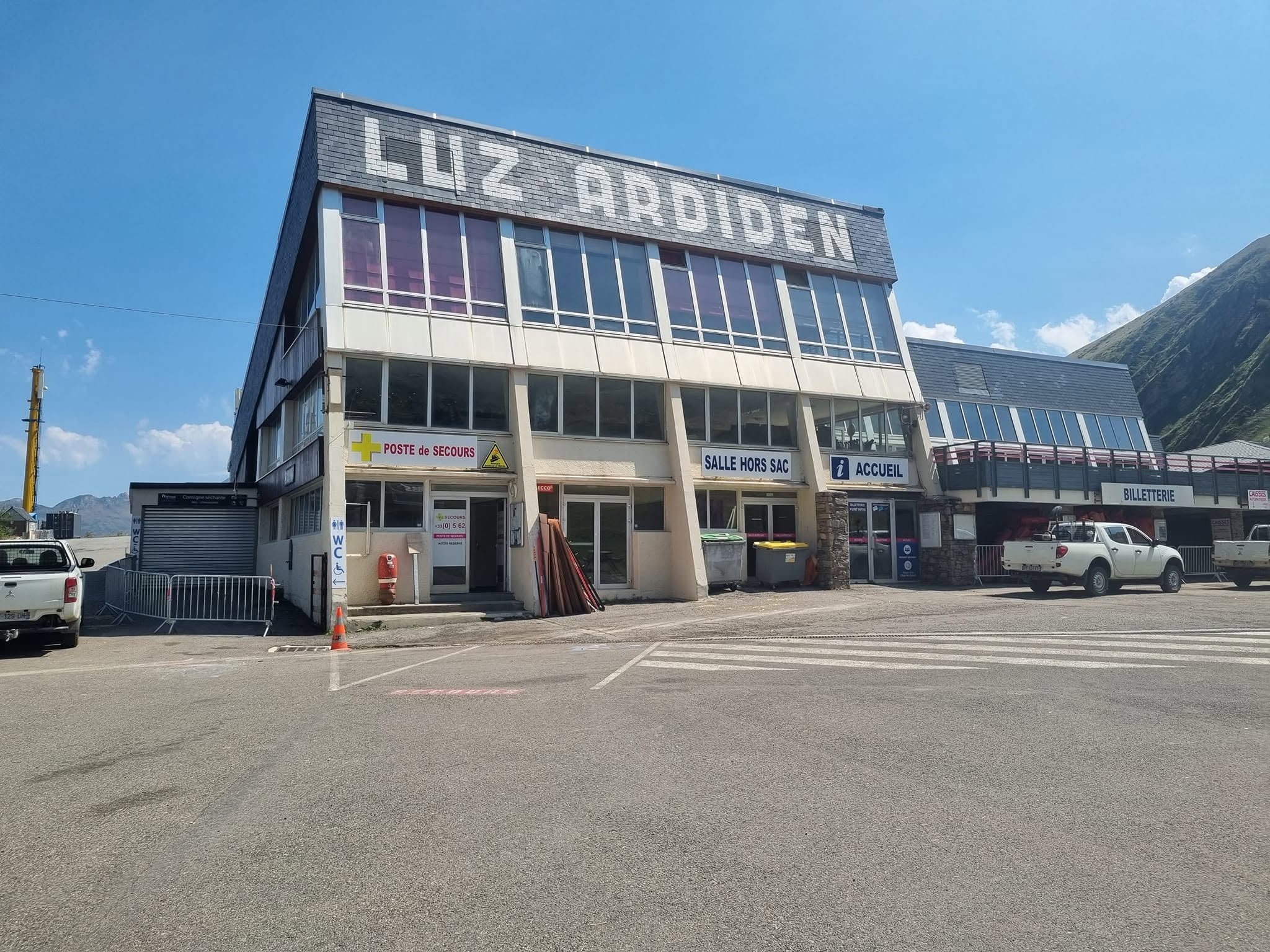
The Luz Ardiden ski station — Tap is on the wall by the barriers you see in front of the garage.
There's more to this mountain than the gradient.
From its famous Tour de France hairpins to the quieter roads hiding amongst the trees, Luz Ardiden has plenty to offer anyone prepared to explore a little further.
And as my own adventures have demonstrated, sometimes the most memorable rides are the ones that don't follow the obvious road.
Those experiences, and plenty of others, are woven into the stories behind The Cols of a Midlife Cyclist.
If you've enjoyed this guide, take a look at the books, and discover the stories behind the climbs.